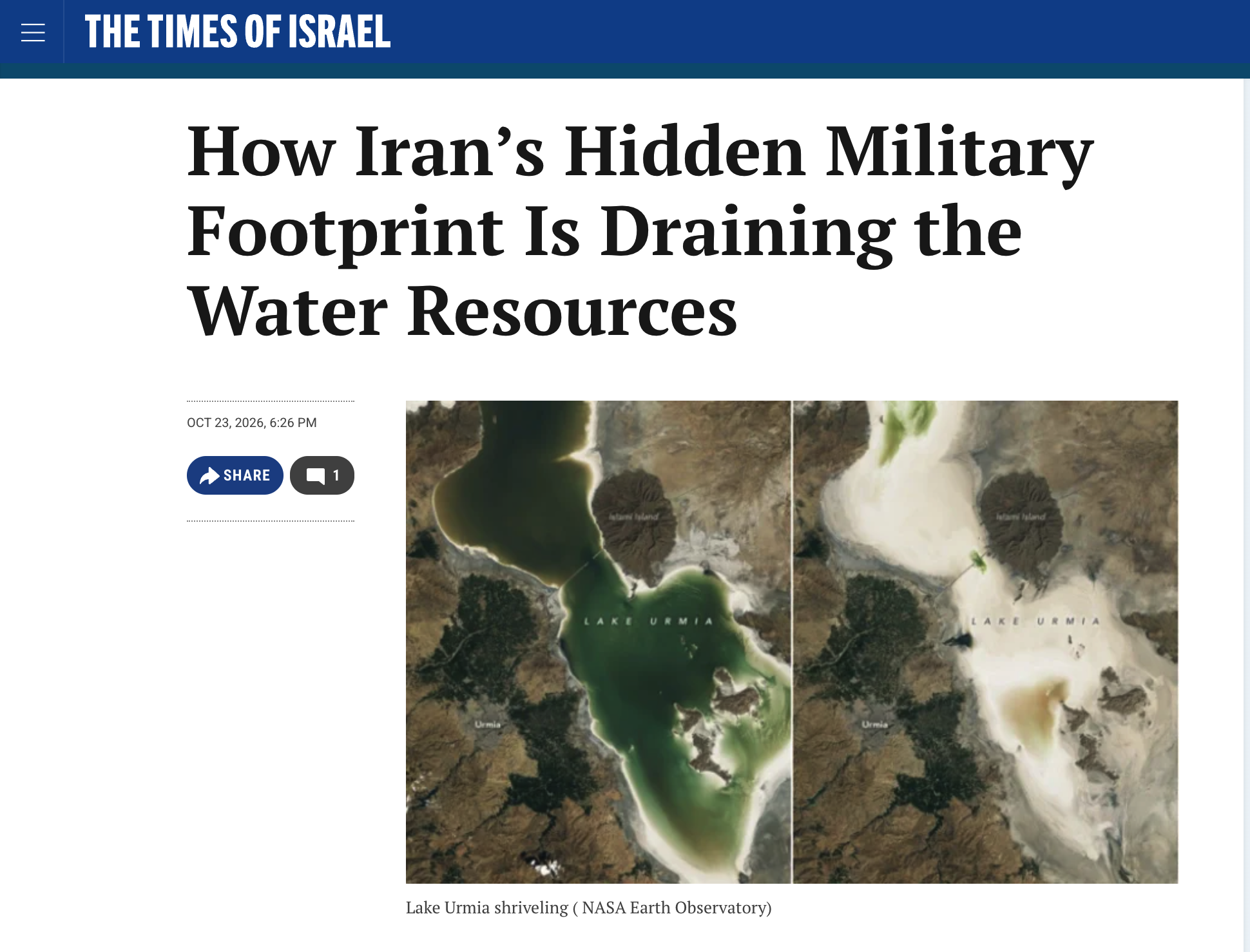
Atossa Association members Soma Alikhani and Shabnam Nikbakhsh have co-authored an article published in The Times of Israel, examining the impact of the Islamic regime’s military footprint on Iran’s escalating water crisis.
In their article, they expose the connection between Iran’s devastating water crisis, environmental mismanagement, and the Islamic Republic’s expanding military infrastructure.
From the collapsing Lake Urmia and the drying Zayandeh-Rud River to the depletion of groundwater reserves, Iran’s natural heritage is under severe threat. The authors highlight the environmental costs of military infrastructure, including facilities associated with the Islamic Revolutionary Guard Corps (IRGC), and question a system that prioritises military ambitions over the country’s natural resources and the well-being of its people.
The article also reflects on Iran’s environmental legacy, including its role in the 1971 Ramsar Convention on Wetlands, and explores the vision for environmental restoration and sustainable water management presented in Crown Prince Reza Pahlavi’s Iran Prosperity Project.
Iran’s environmental crisis cannot be separated from the policies and priorities of the Islamic Republic. Protecting the country’s water resources requires accountability, responsible governance, and a future in which Iran’s natural heritage and the welfare of its people come first.
Read the full article in The Time of Israel